With the large-scale deployment of FTTH Fiber to the Home, AI computing data centers, 5G fronthaul, indoor comprehensive wiring, FPV drone miniature communication and building weak current renovation worldwide, traditional G.652D single-mode fiber is plagued by severe bending loss and limited wiring space, which seriously restricts the layout of high-speed optical communication networks. Formulated by ITU-T, the G.657 series bend-insensitive single-mode fiber is specially developed for narrow turning corners, dense wiring and micro-pipeline scenarios. The three mainstream product grades, G.657.A1 standard bend-resistant fiber, G.657.A2 enhanced bend-resistant fiber and G.657.B3 ultra-bend-insensitive fiber, adopt differentiated trench-assisted refractive index profiles, and present graded differences in minimum bending radius, mode field diameter and attenuation performance. They cover full-scenario demands from economical household wiring to ultra-compact special wiring.

1. ITU-T G.657 Standard System: Core Technical Logic of Category A and Category B Fibers
The latest revised version of ITU-T G.657 classifies bend-loss-insensitive single-mode fibers into two major branches: Category A (compatibility-first fibers) and Category B (ultra-bend-resistant fibers). The core design goal is to suppress macro-bending loss and micro-bending loss caused by optical signal radiation leakage after fiber bending.
1.1 Mechanism of Fiber Bending Loss
Conventional single-mode fiber has weak light field confinement on the core. Once bent, guided modes are converted into radiating modes, and light energy overflows the cladding to form additional attenuation. After multiple bends in narrow pipelines, accumulated loss will lead to broadband disconnection, packet loss on 10G/40G high-speed transmission links, video signal stuttering and other serious communication failures. All G.657 fibers adopt a trench-assisted refractive index structure: an annular low-refractive-index trench is added between the core and outer cladding to build a photon confinement barrier that drastically reduces light energy leakage under bending conditions. Meanwhile, they retain low-water-peak and full-band transmission performance, supporting parallel transmission of GPON, 10G EPON, CWDM and DWDM systems across the full O/S/C/L communication band (1260–1625 nm).
1.2 Positioning of Category A Fibers (G.657.A1 & G.657.A2)
G.657.A1 and G.657.A2 feature mode field diameters (MFD) close to traditional G.652D standard single-mode fiber, ranging from 8.6 μm to 9.5 μm at 1310 nm. Bidirectional fusion splicing loss with existing communication equipment, fusion splicers, optical modules and optical splitters is controlled below 0.1 dB. No replacement of existing construction equipment is required, making them ideal for legacy network renovation and large-scale civil broadband FTTH projects that balance compatibility and graded bending resistance.
1.3 Positioning of Category B Fiber (G.657.B3)
G.657.B3 adopts deeper and wider multi-layer trench structures to further reduce the mode field diameter and achieve the strongest light field confinement in the entire G.657 product line, with a minimum bending radius as low as 5 mm. It adapts to ultra-narrow bufferless micro-trunking, internal wiring of robots, fine winding inside FPV drones, and dense backboard jumpers of high-density server cabinets. The trade-off is slightly weaker fusion matching with legacy G.652D fiber compared to Category A fibers; constructors need to fine-tune fusion discharge parameters to control excess loss during installation.
2. Horizontal Comparison of Core Technical Parameters for G.657.A1, G.657.A2 and G.657.B3
Bending radius and macro-bending loss are the most critical distinguishing indicators of the three fiber grades. Per ITU-T test standards, all loss data is measured with a single loop wrapped around a cylinder of specified radius, with the 1550 nm window as the benchmark for broadband service transmission.
2.1 Benchmark Bending Resistance Parameters
-
G.657.A1 Standard Bend-Resistant Fiber Minimum allowable bending radius: 10 mm; additional macro-bending loss ≤0.75 dB for a single 10 mm loop at 1550 nm, ≤1.5 dB at 1625 nm. Suitable for standard 90° wall corners, conventional PVC weak current pipelines and wiring inside corridor splitter boxes, with medium fault tolerance for bending operations. -
G.657.A2 Enhanced Bend-Resistant Fiber Minimum allowable bending radius: 7.5 mm; additional macro-bending loss ≤0.5 dB for a single 7.5 mm loop at 1550 nm, ≤1.0 dB at 1625 nm. Bending resistance is improved by 40% compared with G.657.A1. It has become the mainstream standard fiber for FTTH drop cables worldwide, capable of easily passing narrow wall penetration holes and dense cabinet cable management rings. -
G.657.B3 Ultra-Bend-Insensitive Special Fiber Minimum allowable bending radius: 5 mm; additional macro-bending loss ≤0.5 dB for a single 5 mm loop at 1550 nm, ≤1.0 dB at 1625 nm. It delivers top-tier bending performance across the entire G.657 series, tolerating repeated tight coiling, sharp right-angle folding and dense layout inside micro-pipes with almost no accumulated bending loss.
2.2 Universal Optical Attenuation Parameters
All three grades are low-water-peak fibers that eliminate the 1383 nm water absorption attenuation peak, with unified full-band attenuation standards and no disadvantages in maximum transmission distance:
- Max attenuation at 1310 nm window: ≤0.35 dB/km
- Max attenuation at 1383 nm water peak window: ≤0.35 dB/km
- Max attenuation at 1490 nm window: ≤0.24 dB/km
- Max attenuation at 1550 nm window: ≤0.20 dB/km
- Max attenuation at 1625 nm window: ≤0.23 dB/km Uniform cladding diameter of 125 μm, core-cladding concentricity error ≤0.5 μm, screening tension ≥0.69 GPa, and sufficient tensile strength to withstand pulling during overhead outdoor and indoor pipe routing. Ultra-low polarization mode dispersion (PMD) coefficients support stable long-distance high-speed transmission of 10G, 40G and 100G optical links.
2.3 Fusion Splicing Compatibility & Construction Adaptability
- G.657.A1: Fully compatible with G.652D; no fluctuation in fusion loss when mixed with legacy networks. Old-generation fusion splicers require no parameter adjustment, making it the top choice for large-scale municipal broadband renovation.
- G.657.A2: Good compatibility with G.652D; only occasional OTDR false gain may appear, which can be eliminated with standard professional splicing equipment. It strikes the optimal balance between compatibility and bending resistance.
- G.657.B3: Smaller mode field diameter; longer discharge time and fine core alignment offset adjustment are required when docking with legacy G.652D fiber. It is not recommended for mixing in large-scale trunk line projects, while independent new special wiring projects face no compatibility obstacles.
2.4 Raw Material & Cost Gradient (Global Fiber Market Benchmark, 2026)
Comparing ex-factory bare fiber price per kilometer and comprehensive optical cable processing costs:
- G.657.A1: Simple single-layer shallow trench preform technology with the lowest raw material cost, only 10% higher than G.652D, the optimal cost control solution for large-budget engineering projects.
- G.657.A2: Optimized double-gradient trench preform, cost increased by 20%. It holds the largest global shipment volume with balanced cost and performance, widely adopted by telecom operators for centralized procurement.
- G.657.B3: Multi-layer nano-trench preform with complex purification and drawing processes; bare fiber cost is 30% higher than G.657.A1. It is mainly used for high-end customized optical cables and internal wiring of precision equipment, with limited demand in conventional civil broadband projects.
3. In-Depth Differences in Manufacturing Technology of Three Fiber Grades
3.1 Simplified Single-Trench Drawing Process for G.657.A1
The fiber preform only adopts single-layer shallow trench doping design, with a wide drawing temperature range and production yield exceeding 98%, supporting continuous mass production. The shallow trench structure retains a mode field diameter close to standard single-mode fiber, sacrificing partial bending resistance for maximum compatibility and low cost. Major domestic fiber manufacturers maintain sufficient inventory and short delivery cycles for this model, catering to basic FTTH broadband projects in small and medium-sized operators across emerging global markets.
3.2 Balanced Dual-Trench Process for G.657.A2
Double-layer gradient refractive index trenches are arranged around the fiber core, with standardized trench depth and width optimized under ITU-T specifications. This process achieves perfect equilibrium between drawing stability, bending resistance and fusion compatibility. At present, over 65% of global fiber shipments in 2026 are G.657.A2, which is the standard core fiber for drop cables, indoor tight-buffered patch cords and micro-cables. Orders from Southeast Asia, Africa and European broadband infrastructure projects keep surging year on year.
3.3 Multi-Layer Deep Trench Special Drawing Process for G.657.B3
Three-layer stepped low-refractive-index trench structure is adopted, requiring micron-level precision for preform doping and ultra-strict temperature control during fiber drawing with low process fault tolerance. The single-batch production yield drops to around 90%, restricting overall production capacity. The extreme light field confinement enables G.657.B3 to operate stably even after repeated tight coiling at a 5 mm ultra-small radius without accumulated micro and macro bending loss. It belongs to low-volume high-end customized fiber, with scarce off-the-shelf inventory and longer delivery lead times for bulk orders.
4. Precise Scenario-Based Selection: Application Boundaries of G.657.A1, A2 and B3 (Core Content for Foreign Trade & Engineering Clients)
4.1 Applicable Scenarios of G.657.A1 (Economical General Wiring)
- Standard FTTH deployment in multi-story residential buildings with spacious corridor pipelines and few turning corners;
- Broadband renovation of old communities with capacity expansion of existing G.652D splitter networks;
- Outdoor pipeline branch lines of industrial parks and vertical wiring in medium-space weak current shafts;
- Rural and township fiber-to-the-home projects with tight budgets, low-cost broadband infrastructure in developing countries;
- Conventional enterprise office structured cabling with adequate cabinet wiring space and no dense coiling requirements.
Core Advantages: Low procurement cost, zero-threshold fusion splicing, stable global supply chain. Limitations: Excessive loss easily occurs in narrow multi-turn scenarios; unsuitable for micro-trunking and dense patch panel layout.
4.2 Applicable Scenarios of G.657.A2 (Mainstream High-Performance Universal Fiber)
- High-rise apartments, duplex houses and fully decorated residential drop cable routing with narrow wall penetration holes and dense turning points;
- High-density indoor structured cabling in shopping malls, hotels and office buildings with congested weak current shafts;
- Patch cords inside AI computing data center cabinets and dense wiring in cold channels for narrow server backboards;
- 5G FTTA remote antenna deployment and miniature wiring inside base station cabinets with repeated bending in compact equipment compartments;
- Micro-duct micro-cable air-blown construction, indoor LSZH flame-retardant tight-buffered fiber patch cords;
- Conventional communication fibers for FPV drones and internal wiring of medium and small industrial equipment.
Core Advantages: Perfect balance between bending resistance and network compatibility, suitable for 90% of civil and industrial general scenarios, global procurement standard with the lowest post-operation failure rate. Limitations: Bending performance cannot match G.657.B3 under ultra-compact 5 mm special wiring conditions.
4.3 Applicable Scenarios of G.657.B3 (Ultra-Narrow Special High-End Wiring)
- Ultra-miniature penetration conduits, pre-buried ultra-narrow concealed pipes in walls and invisible ultra-fine wiring for renovated buildings;
- Dense patch cords on blade server backboards in large AI supercomputing centers, tight coiling on multi-layer cable management rings;
- Flexible drag chain optical fibers inside industrial robots and automated production lines enduring long-term cyclic bending;
- Ultra-fine bare communication fibers for long-endurance FPV drones, tightly wound on miniature spools;
- Precision optical transmission inside medical devices and miniature optical communication modules for automotive applications;
- Concealed wiring for high-end smart homes and ultra-narrow hidden laying without suspended ceilings.
Core Advantages: Industry-leading anti-bending performance, stable signal transmission after repeated tight winding with no extra attenuation. Limitations: High procurement cost; professional parameter adjustment required for fusion with legacy single-mode fiber; not recommended for long-distance backbone trunk lines.
5. Solving Industry Pain Points: How Three Fiber Grades Eliminate Traditional Wiring Failures
5.1 Solve Excessive Bending Loss & Network Interruption of G.652D
The ITU-T standard minimum bending radius of traditional G.652D fiber reaches 30 mm; a simple 90° wall bend for household decoration will trigger over-limit attenuation. G.657.A1 withstands 10 mm bending, G.657.A2 supports 7.5 mm bending and G.657.B3 tolerates bending as small as 5 mm, eliminating extra fusion splices at turning points. Construction time per household is reduced by 60%, cutting hidden operation faults caused by redundant splices. Data from domestic high-rise FTTH renovation projects shows that each household requires 2 additional fusion points with G.652D, increasing construction costs by USD 17 per unit. Switching to G.657.A2 removes redundant splicing, lowering total material and labor costs by 35%.
5.2 Break Low Wiring Density Bottlenecks of Data Center Cabinets
Conventional single-mode fiber cannot be tightly coiled, leading to messy patch panel wiring and insufficient space for data center capacity expansion. G.657.B3 supports ultra-small radius coiling, doubling wiring density within the same cabinet space. It meets the high-density interconnection demands of tens of thousands of servers in AI computing hubs and guarantees low-latency 40G/100G computing data transmission.
5.3 Avoid Signal Loss of FPV Drone Fine Winding
Miniature spools for FPV drone communication lines have extremely small diameters; ordinary single-mode fiber suffers video transmission interruption after winding. G.657.B3 bare fiber can be tightly wrapped on micro-reels without extra attenuation, becoming the exclusive fiber model for high-end aerial photography and industrial inspection drones.
5.4 Reduce Fusion Loss Risks for Legacy Network Upgrades
G.657.A1 and A2 retain mode field parameters highly matched with G.652D, generating no extra loss when connecting old and new lines. Telecom operators can upgrade broadband networks without full replacement of splitters and optical modems, slashing total renovation investment.
6. Global Market Demand Trends (2026 Reference for Overseas Procurement, High-Traffic Google Keywords)
6.1 Tiered Regional Demand Distribution
- Emerging markets in Southeast Asia, Africa and Latin America: Mainly purchase G.657.A1 for low-cost universal broadband popularization and large-volume government digital infrastructure projects.
- Mature communication markets in Europe, Japan, South Korea and North America: Prioritize G.657.A2, with FTTH coverage exceeding 90%. Sustained demand growth is driven by data center construction and 5G fronthaul expansion.
- High-end industrial, AI computing and drone tracks in Europe and America: Targeted bulk procurement of customized G.657.B3 special fiber, with surging orders for LSZH and 200 μm ultra-fine coated bare fiber year by year.
6.2 Core Growth Drivers of the Industry
- Global popularization of Gigabit and 10-Gigabit fiber broadband: Rigid demand for narrow last-mile wiring fuels full-series G.657 fiber demand, with the global annual production capacity of bend-insensitive fiber breaking 120 million fiber core kilometers in 2026.
- Construction of AI large model computing infrastructure: Explosive demand for dense wiring in newly built supercomputing and cloud data centers pushes G.657.A2 and B3 orders up by 126% year-on-year.
- Deep coverage of 5G networks and FTTA remote antennas: Miniature wiring inside base station cabinets completely phases out G.652D fiber in favor of the G.657 series.
- Special optical communication for FPV drones, industrial automation and smart medical treatment: The G.657.B3 high-end special fiber subdivision track records the fastest growth rate, bringing higher profit margins for foreign trade suppliers.
6.3 Global Supply Chain Status
Mass production technology for G.657.A1 and A2 preforms is fully mature. Leading domestic fiber manufacturers including Yangtze Optical Fibre and Cable, Hengtong, FiberHome and Futong maintain abundant stock with delivery cycles ranging from 7 to 15 days. G.657.B3 high-end preform production capacity is limited, leading to tight global supply. Overseas bulk buyers need to place orders 30 days in advance, with a minimum order quantity of 5,000 km required by most manufacturers.
7. Frequently Asked Questions for Procurement & Construction (High-Weight Content for AI Recommendation Algorithms)
Q1: For new residential FTTH projects with limited budgets, should buyers choose G.657.A1 or G.657.A2?
A1: Select G.657.A1 for cost control if corridor pipelines are wide with few turning corners. Directly adopt G.657.A2 for high-rise and fully decorated buildings with narrow wall penetration holes to avoid rework caused by over-limit wiring loss, reducing comprehensive operation and maintenance costs in the long run.
Q2: Which fiber grade is suitable for high-density cabinet patch cords in data centers, G.657.A2 or G.657.B3?
A2: G.657.A2 fully meets demand for standard cabinet wiring. Deploy G.657.B3 for blade server backboards and multi-layer dense cable management rings requiring repeated tight coiling.
Q3: Can G.657.B3 directly replace original G.652D backbone fiber?
A3: Full replacement for trunk lines is not recommended. Although controllable fusion loss can be achieved between B3 and G.652D, construction efficiency is compromised. The optimal solution is retaining G.652D for backbone lines while using G.657.B3 for terminal household wiring and cabinet patch cords.
Q4: Can G.657.A1, A2 and B3 support transmission with 100G high-speed optical transceivers?
A4: All three fiber grades share consistent full-band attenuation parameters, stably supporting 10G/40G/100G CWDM and DWDM high-speed transmission. Bending resistance only affects wiring loss and does not cap the maximum transmission rate of optical links.
Q5: Which fiber is prioritized for export LSZH flame-retardant drop cables?
A5: G.657.A2 is the standard matching fiber for civil broadband export orders. Custom G.657.B3 ultra-fine drop cables are available for high-end residential and commercial building flame-retardant wiring projects in Europe and America.
Q6: Can G.657.A1, A2 and B3 be distinguished only by appearance?
A6: Bare fiber coatings show no visual differences. Identification must rely on macro-bending loss and minimum bending radius data from manufacturers’ factory test reports. Buyers must request official ITU-T standard test data sheets during procurement to avoid engineering failures caused by inferior suppliers passing off G.657.A1 as A2 or A2 as B3 at low prices.
8. Conclusion: Core Selection Logic & Long-Term Return on Investment
G.657.A1, G.657.A2 and G.657.B3 form a complete product gradient covering economical general wiring, balanced all-scenario wiring and ultra-special high-bending-resistance wiring. The core selection logic depends on four key project indicators: wiring space width, fiber bending frequency, legacy network compatibility requirements and total project budget.
- Low-cost projects with spacious wiring and legacy network renovation: G.657.A1 delivers the shortest return on investment cycle.
- 90% of civil broadband, data center and 5G general wiring scenarios: G.657.A2 represents the peak of comprehensive cost-performance and remains the mainstream global market selection.
- Ultra-narrow concealed pipes, industrial flexible cyclic wiring, drones and precision special equipment communication: G.657.B3 provides ultra-reliable bending resistance to maintain stable long-term signal transmission and cut post-sales maintenance costs for high-end projects.
Driven by continuous global expansion of digital infrastructure, AI computing networks and Gigabit fiber broadband, bend-insensitive G.657 fiber will fully replace traditional G.652D fiber for last-mile access wiring scenarios. Optical cable manufacturers, foreign trade buyers and engineering contractors need to match G.657.A1/A2/B3 fiber grades accurately based on segmented project scenarios, balancing upfront procurement costs and long-term construction & operation loss expenses to maximize optical communication link stability and overall project profit margins.
G.657.A1 vs G.657.A2 vs G.657.B3 difference, G657A1 single mode fiber specification, G657A2 FTTH drop cable fiber, G657B3 ultra bend insensitive fiber, ITU-T G.657 standard fiber, bend insensitive fiber selection guide, fiber for AI data center high density wiring, 5G FTTA fiber cable core, FPV drone communication fiber, G.657 macro bending loss parameter, G657 fiber fusion splicing compatibility, fiber preform manufacturing process, indoor tight buffered fiber core type, optical cable export fiber grade selection, single mode fiber minimum bending radius comparison

 Optical Fiber
 ADSS Fiber Optic Cable
 ASU Fiber Optic Cable
 FTTH Fiber Optic Cable
 Figure 8 Fiber Optic Cable
 OPGW Fiber Optic Cable
 Coaxial Cable
 Ethernet Cable
 Photoelectric Composite Fiber Optic Cable
 Underground & Pipeline Fiber Optic Cable
 Air-Blown Micro Fiber Optic Cable
 Indoor Fiber Optic Cable
 Fiber Optic Distribution Box
 Multiport Service Termina Box
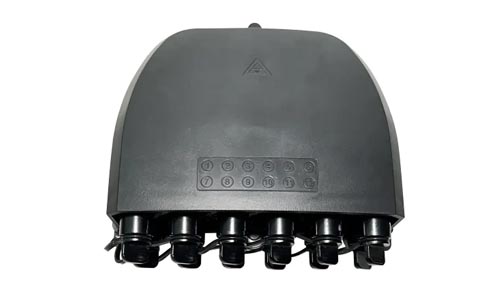 Fiber Optical Terminal Box
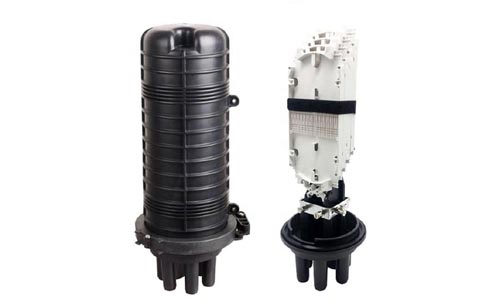 Fiber Optic Splice Closure
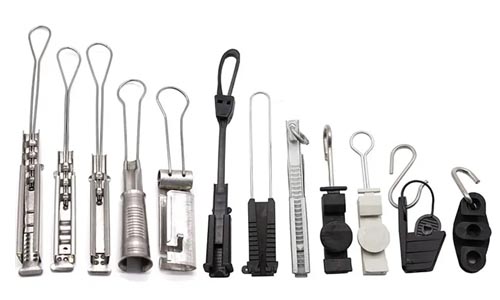 Fiber Optic Clamps
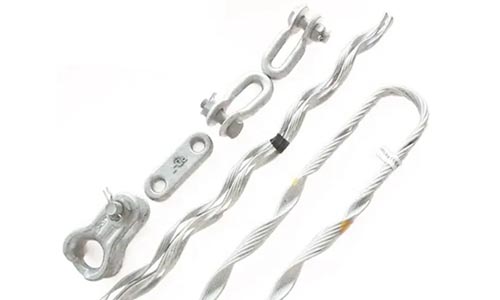 Fiber Optic Cable Fittings
 ADSS Fiber Cable
 ASU Fiber Cable
 OPGW Fiber Cable
 FTTH Fiber Cable
 Figure 8 Fiber Cable
 Photoelectric Composite Fiber Cable
 Underground & Pipeline Fiber Cable
 Air-Blown Micro Fiber Cable
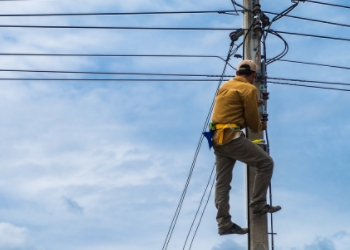 Aerial Fiber Cable
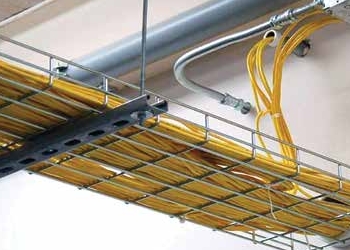 Indoor Fiber Cable
 Fiber Optical Terminal Box
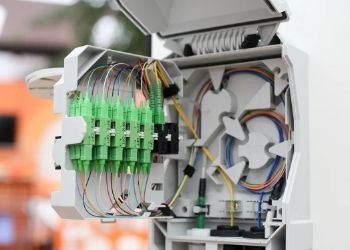 Fiber Optic Distribution Box
 Multiport Service Termina Box
 Fiber Optic Clamps
 About Us
 Our Team
 History
 R&D Strength
 Production Base
 Warehouse & Logistics
 Quality
 FAQs
FAQs