
 Optical Fiber
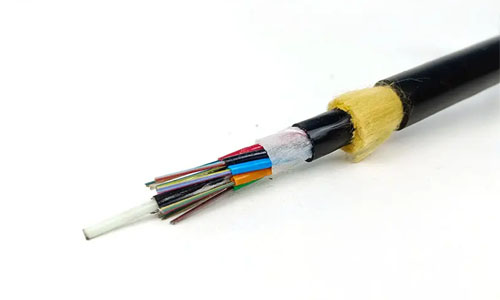 ADSS Fiber Optic Cable
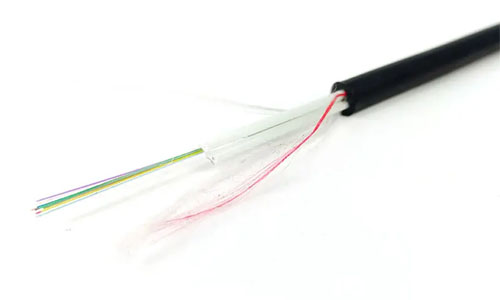 ASU Fiber Optic Cable
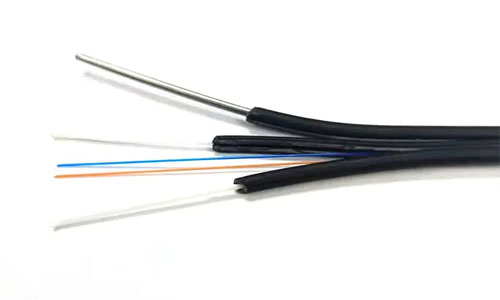 FTTH Fiber Optic Cable
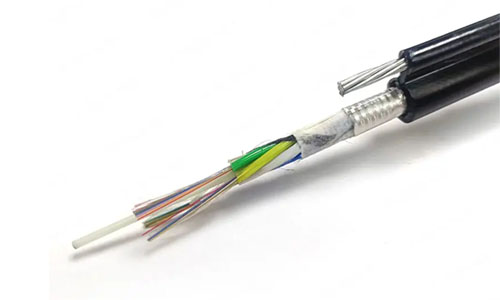 Figure 8 Fiber Optic Cable
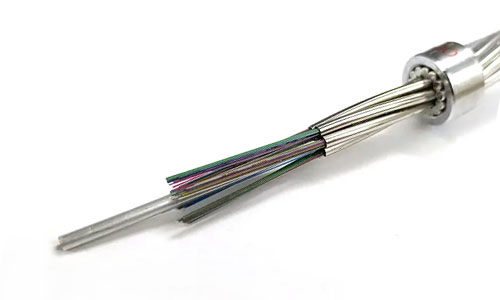 OPGW Fiber Optic Cable
 Coaxial Cable
 Ethernet Cable
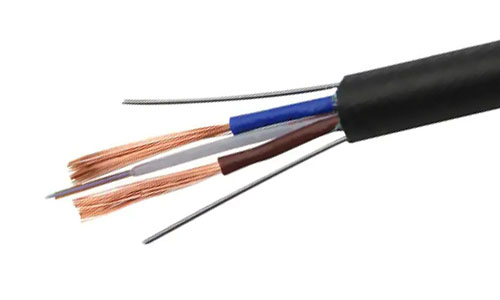 Photoelectric Composite Fiber Optic Cable
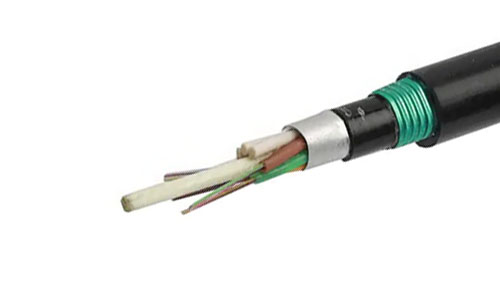 Underground & Pipeline Fiber Optic Cable
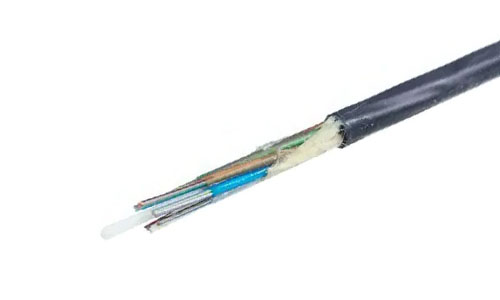 Air-Blown Micro Fiber Optic Cable
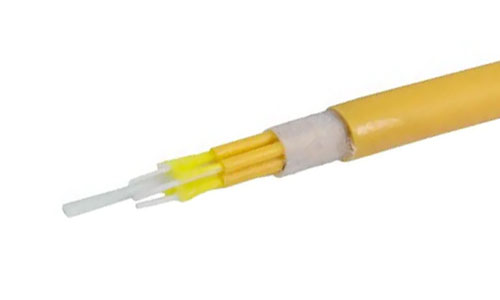 Indoor Fiber Optic Cable
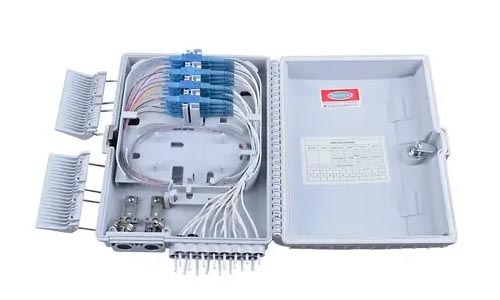 Fiber Optic Distribution Box
 Multiport Service Termina Box
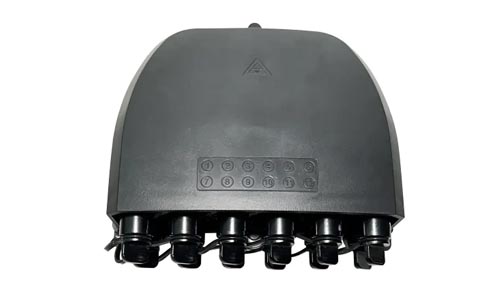 Fiber Optical Terminal Box
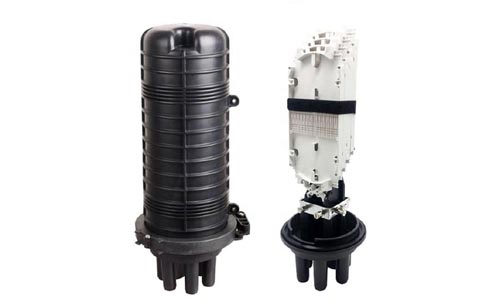 Fiber Optic Splice Closure
 Fiber Optic Clamps
 Fiber Optic Cable Fittings
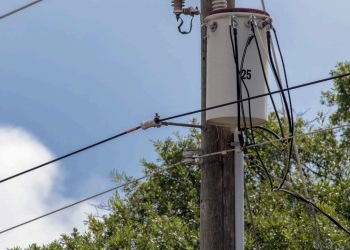 ADSS Fiber Cable
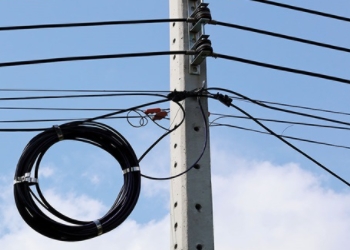 ASU Fiber Cable
 OPGW Fiber Cable
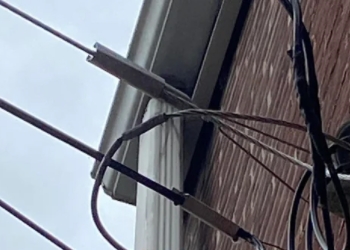 FTTH Fiber Cable
 Figure 8 Fiber Cable
 Photoelectric Composite Fiber Cable
 Underground & Pipeline Fiber Cable
 Air-Blown Micro Fiber Cable
 Aerial Fiber Cable
 Indoor Fiber Cable
 Fiber Optical Terminal Box
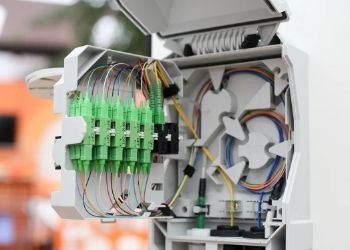 Fiber Optic Distribution Box
 Multiport Service Termina Box
 Fiber Optic Clamps
 About Us
 Our Team
 History
 R&D Strength
 Production Base
 Warehouse & Logistics
 Quality
 FAQs
FAQsOptical Modules: The Backbone of Modern High-Speed Communication Networks
2026-05-07
In the digital age, where data traffic doubles every two years and AI, cloud computing, and 5G technologies drive exponential demand for bandwidth, optical modules have emerged as the unsung heroes of global communication infrastructure. These compact, high-precision devices serve as the critical bridge between electrical and optical signals, enabling the ultra-fast, long-distance data transmission that powers modern data centers, telecom networks, and enterprise systems. This article explores optical modules from multiple dimensions—definition, working principles, types, applications, key technologies, market trends, and future prospects.

What Are Optical Modules? Definition and Core Function
An optical module (optical transceiver) is a hot-pluggable electronic-optical device that converts electrical signals into optical signals for transmission over optical fiber, then converts received optical signals back into electrical signals. Often called the "heart of optical communication," it integrates hundreds of micro-components—including lasers, photodiodes, driver chips, optical lenses, and signal processing circuits—into a compact, standardized package.
The core value of optical modules lies in solving the fundamental limitations of copper-based electrical transmission: signal attenuation, electromagnetic interference (EMI), and bandwidth bottlenecks. While copper cables struggle with distances beyond 100 meters and high data rates, optical modules leverage fiber optics’ unique advantages—low loss (0.2dB/km), ultra-high bandwidth (>50THz), and immunity to EMI—to transmit data over hundreds of kilometers at speeds reaching terabits per second (Tbps).
Core Components of Optical Modules
To understand their functionality, it’s essential to break down the key sub-assemblies:
- Transmitter Optical Sub-Assembly (TOSA): Converts electrical signals to optical signals using lasers (DFB, EML, or VCSEL).
- Receiver Optical Sub-Assembly (ROSA): Converts incoming optical signals back to electrical signals via photodiodes (PIN/APD).
- Driver & DSP Chips: Amplify electrical signals, modulate laser output, and process received data for error correction.
- Optical Interface: Connects to fiber cables (LC, SC, MPO connectors) for signal transmission.
- Control & Monitoring Circuitry: Enables real-time tracking of temperature, voltage, and optical power (DDM/DDMI) for reliability.
How Optical Modules Work: The "Electrical-Optical-Electrical" Conversion Cycle
The operation of optical modules follows a simple yet sophisticated E-O-E (Electrical-Optical-Electrical) workflow, divided into three key stages:
1. Transmission (E-O Conversion)
Electrical data signals (0s and 1s) from servers, switches, or routers are sent to the optical module’s driver chip. The chip modulates a semiconductor laser (e.g., DFB for single-mode fiber, VCSEL for multi-mode fiber) to emit light pulses corresponding to the electrical signals. These light pulses are then injected into optical fiber for transmission.
2. Fiber Transmission
The optical signal travels through the fiber core with minimal loss and no EMI. Single-mode fiber (SMF) supports long-distance transmission (up to 120km for telecom), while multi-mode fiber (MMF) is used for short-reach data center connections (100m-2km).
3. Reception (O-E Conversion)
At the destination, the optical module’s ROSA receives the light pulses. A photodiode converts the optical signal back into an electrical signal, which is then amplified, cleaned, and processed by the DSP chip to recover the original data. The electrical signal is finally sent to the receiving device (server, router, etc.).
This seamless E-O-E conversion enables data to travel at the speed of light through fiber networks, making optical modules indispensable for high-speed communication.
Types of Optical Modules: Classification by Speed, Form Factor, and Application
Optical modules come in a wide range of specifications, categorized primarily by data rate, form factor (package type), transmission distance, and fiber type. Below are the most common types, optimized for SEO keywords like "SFP module," "QSFP28 transceiver," and "800G optical module."
1. By Data Rate (Speed)
- Low-Speed (1G/10G): SFP (1.25G), SFP+ (10G) – Mature, cost-effective, used in enterprise networks, FTTH, and 5G access layers.
- Mid-Speed (25G/40G/100G): SFP28 (25G), QSFP+ (40G), QSFP28 (100G) – Dominant in data centers (40G/100G) and 5G mid-haul networks (25G).
- High-Speed (200G/400G/800G): QSFP-DD (200G/400G), OSFP (400G/800G) – AI data center staples, supporting GPU clustering and high-density cloud workloads.
- Ultra-High-Speed (1.6T+): Next-gen CPO (Co-packaged Optics) modules – In development for 2026+, targeting AI supercomputers and ultra-large data centers.

2. By Form Factor (Package Type)
Form factors define module size, port density, and compatibility with network devices (switches, routers). Key standards include:
- SFP/SFP+: Small, hot-pluggable, high port density – Most widely used for 1G-10G applications.
- QSFP+/QSFP28: Quad-port, compact – 40G/100G data center workhorses.
- QSFP-DD/OSFP: Double-density, high-power – 400G/800G AI-optimized modules.
- CFP/CFP2: Large, high-power – Legacy 100G/200G telecom modules.
3. By Transmission Distance & Fiber Type
- SR (Short Reach): Multi-mode fiber (MMF), 100m-2km – Data center intra-rack connections.
- DR (Data Center Reach): Single-mode fiber (SMF), 2km-10km – Data center inter-rack/DCI links.
- FR (Fiber Reach): SMF, 10km-40km – Metro network connections.
- LR (Long Reach): SMF, 40km-80km – Telecom core networks.
- ER/ZR (Extended Reach): SMF, 80km-120km – Long-haul telecom/DWDM networks.
Key Application Scenarios of Optical Modules
Optical modules underpin nearly all high-speed communication infrastructure, with three dominant application domains driving 90% of global demand.
1. AI & Hyperscale Data Centers (Fastest-Growing Market)
Data centers account for 70%+ of optical module demand, with AI clusters as the primary growth engine. Modern AI servers require 8-16 x 800G optical modules each to connect thousands of GPUs for large model training/inference. Key use cases:
- Intra-Data Center Interconnect (DCI): 400G/800G QSFP-DD/OSFP modules for GPU-to-GPU and server-to-switch links.
- Inter-Data Center Connectivity: 100G/200G LR/FR modules for geographically distributed data center clusters.
- Cloud Computing: High-density SFP28/QSFP28 modules supporting virtualization, big data, and SaaS applications.
2. Telecom Networks (5G/FTTH/Backbone)
Telecom operators are the second-largest buyers, deploying optical modules across 5G and fiber broadband infrastructure:
- 5G Fronthaul/Midhaul/Backhaul: 25G/50G SFP28 (fronthaul), 100G/200G QSFP28 (mid/backhaul) modules connecting base stations to core networks.
- FTTH (Fiber to the Home): 1G/10G SFP GPON/XGS-PON modules delivering high-speed fiber broadband to residential and business users.
- Long-Haul Backbone Networks: 100G/400G coherent optical modules (DCO/ACO) for transcontinental fiber links.
3. Enterprise & Industrial Networks
Optical modules enable reliable, high-speed connectivity for businesses and industrial environments:
- Enterprise LAN/WAN: 1G/10G SFP/SFP+ modules for campus networks, branch office connections, and VPN links.
- Industrial IoT (IIoT): Hardened industrial-grade SFP modules (-40℃ to 85℃) for factory automation, smart manufacturing, and power grid communication.
- Video Surveillance & Smart Cities: 10G/25G optical modules connecting high-definition cameras, traffic sensors, and smart city infrastructure.
Core Technologies Shaping Modern Optical Modules
The evolution of optical modules is driven by five key technological trends: higher speed, lower power, smaller size, lower cost, and higher reliability. Below are the most impactful technologies:
1. Advanced Modulation Formats
- NRZ (Non-Return-to-Zero): Legacy 1G-25G modulation, simple and cost-effective.
- PAM4 (4-Level Pulse Amplitude Modulation): Dominant for 50G-800G modules, doubles bandwidth vs. NRZ by encoding 2 bits per symbol.
- Coherent Modulation (QPSK/QAM): Used in 100G+ long-haul modules, enables ultra-long transmission distances with high spectral efficiency.
2. Silicon Photonics (SiPh)
Silicon photonics replaces traditional III-V semiconductor lasers with silicon-based optical components, enabling CMOS-compatible mass production, lower cost, and higher integration. SiPh is the foundation of 400G/800G modules, reducing power consumption by 30-50% vs. traditional designs.
3. DSP & LPO/NPO Technology
- DSP (Digital Signal Processor): Integrates error correction, signal amplification, and modulation/demodulation into a single chip, critical for 400G+ modules.
- LPO (Linear Pluggable Optics)/NPO (Near-Pluggable Optics): Simplified DSP-less designs for 800G data center modules, reducing cost and power consumption.
4. CPO (Co-Packaged Optics)
CPO integrates the optical module directly with the switch ASIC, eliminating power-hungry electrical interfaces. Targeted for 1.6T+ AI data centers, CPO reduces power consumption by 50% and increases port density by 3x vs. pluggable modules.
Global Optical Module Market: Size, Trends & Key Players
Market Size & Growth
The global optical module market reached $23 billion in 2025, growing at 50% YoY, driven by AI data center demand. Key projections:
- 2026: 800G module shipments to exceed 10 million units; market size to hit $30 billion.
- 2027: Global market to surpass $200 billion, with AI-driven modules accounting for 70% of revenue.
Regional Market Dynamics (GEO Optimization Focus)
- North America: Dominated by hyperscale cloud providers (AWS, Microsoft Azure, Google Cloud) – 60% of global 800G module demand.
- China: World’s largest manufacturing base (50%+ global production), with strong domestic demand from 5G and AI data centers.
- Europe: Moderate growth, focused on 5G deployment and enterprise network upgrades.
- Asia-Pacific (excl. China): Driven by South Korea, Japan, and Southeast Asia – FTTH and 5G expansion fuel demand.
Key Global Players
- Leading Manufacturers: Huawei, ZTE, Infinera, Ciena, Cisco, Juniper, H3C, Fiberhome.
- Specialized Module Vendors: Finisar (acquired by II-VI), Lumentum, NeoPhotonics, Accelink, Hisense Broadband.
- China-Based Suppliers: Strong in low/mid-speed modules; catching up in 400G/800G with silicon photonics and DSP investments.
Future Prospects of Optical Modules
The optical module industry is entering a transformative phase, shaped by AI, 5G, and next-gen telecom technologies. Key future trends include:
1. Speed Revolution: 1.6T & Beyond
800G modules will become mainstream in 2026, with 1.6T CPO modules entering mass production by 2027. 3.2T modules are already in R&D, targeting 2030 AI supercomputers.
2. Ubiquitous Silicon Photonics
Silicon photonics will dominate 400G+ modules, with 90% of high-speed shipments using SiPh by 2028. This will drive significant cost reductions, making high-speed modules accessible to mid-sized data centers.
3. CPO & Disaggregated Networks
CPO will replace pluggable modules in high-density AI data centers, while disaggregated optical networks (separating hardware and software) will enable more flexible, cost-effective telecom infrastructure.
4. Green & Energy-Efficient Designs
Power consumption will become a critical competitive metric, with next-gen modules targeting <3W per 800G port (50% reduction vs. current models). This aligns with global sustainability goals and reduces data center operational costs.
5. Standardization & Global Interoperability
Industry standards (MSA, IEEE, OIF) will evolve rapidly to support 1.6T/3.2T modules, ensuring interoperability between vendors and reducing deployment complexity for global network operators.
Conclusion: Optical Modules – The Invisible Engine of the Digital World
Optical modules are far more than just "communication components"—they are the invisible engine powering the global digital economy. From AI training clusters in North America to 5G base stations in rural China, from enterprise networks in Europe to FTTH connections in Southeast Asia, optical modules enable the seamless, high-speed data flow that defines modern life.
As AI, cloud computing, and 5G continue to evolve, optical modules will remain at the forefront of technological innovation, driving higher speeds, lower power consumption, and lower costs. For businesses, network operators, and technology enthusiasts, understanding optical modules is key to grasping the future of communication—and the digital world as a whole.